Spine Surgeon
Sciatica Specialist Doctor in Mumbai
Sciatica
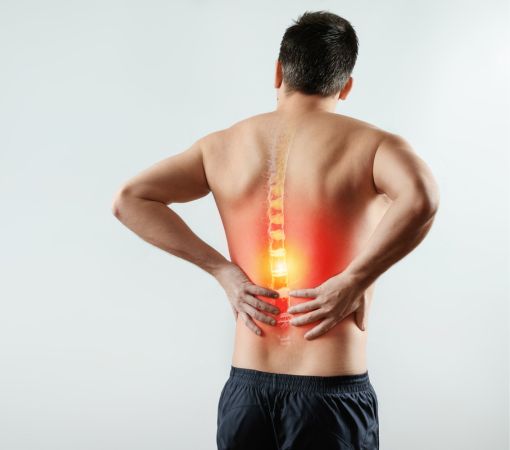
Sciatica is a condition characterized by pain that radiates along the path of the sciatic nerve, usually caused by compression or irritation of the nerve roots in the lower spine. It occurs when irritation, inflammation, pinching, or compression impacts the nerves running from your lower back down to your legs. It is uncommon before the age of 20 unless associated with an injury. While most cases improve on their own, in some instances, treatment becomes necessary, and severe cases may require surgery.
What are the causes and symptoms of Sciatica?
Causes of Sciatica
- Herniated Disc: When the soft inner material of a disc in the spine protrudes and presses on the sciatic nerve.
- Spinal Stenosis: Narrowing of the spinal canal, putting pressure on the nerve.
- Degenerative Disc Disease: Wear and tear on the discs between vertebrae.
- Spondylolisthesis: Displacement of a vertebra, causing nerve compression.
- Piriformis Syndrome: Irritation or compression of the sciatic nerve by the piriformis muscle in the back.
Symptoms of Sciatica
- Sharp Pain: Radiating from the lower back or buttock down the back of the leg.
- Numbness or Tingling: Along the sciatic nerve pathway, often extending to the foot.
- Weakness: Difficulty moving the leg or foot due to muscle weakness.
Burning Sensation: In the affected leg. - Worsening Pain: While sitting or standing for prolonged periods.
- Difficulty Walking: In severe cases, mobility may be impaired.
How to diagnose sciatica?
- Spine X-rays or CT Scans: Provide initial views of bone structures for detecting structural issues.
- MRI Scans: Offer detailed images of soft tissues of spinal nerves and their structure., aiding in the diagnosis of herniated discs, spinal stenosis, and other soft tissue abnormalities.
- Nerve Conduction Velocity Studies (NCV): Assess nerve function by measuring electrical impulse speed, aiding in the identification of nerve compression or damage.
- Electromyography (EMG): Measures muscle response to nerve signals, helping diagnose conditions affecting the nerves and muscles.
What are the potential complications of sciatica if left untreated?
While most individuals fully recover from sciatica, there is a potential complication—chronic, long-term pain. In cases of severe nerve damage, chronic muscle weakness, like a “drop foot,” may occur, making normal walking challenging or impossible due to numbness. Additionally, sciatica has the potential to lead to permanent nerve damage, resulting in a loss of sensation in the affected legs. In severe cases, it could also lead to difficulty in urination and defecation.
What is the treatment for sciatica?
Medications
- Over-the-Counter Pain Relievers: Nonsteroidal anti-inflammatory drugs (NSAIDs) can help manage pain and inflammation.
- Muscle Relaxants: Prescribed to alleviate muscle spasms.
Physical Therapy
- Specific exercises and stretches to improve flexibility and strengthen the back and core muscles.
- Manual therapy techniques, such as massage or spinal manipulation, may provide relief.
Injections
- Epidural Steroid Injections: Deliver anti-inflammatory medication directly to the affected nerve root, providing temporary relief.
When Should You See a Sciatica Specialist in Mumbai?
Most sciatica settles within four to six weeks with rest, medication, and physiotherapy. However, you should not wait to consult a spine specialist if you notice worsening leg weakness, numbness in the groin or inner thighs, or loss of bladder or bowel control these can indicate cauda equina syndrome, a surgical emergency. Similarly, if your pain is severe enough to disrupt sleep, doesn’t improve after two to three weeks of conservative care, or keeps returning, it’s time for a proper evaluation with imaging rather than continuing to self-manage with painkillers. Early diagnosis at this stage often means the difference between a purely non-surgical recovery and one that eventually needs intervention.
What are the surgery options to treat sciatica?
- Microdiscectomy for Pain Relief – In most cases, surgically removing the offending herniated disc provides adequate decompression and dramatic improvement in symptoms. To achieve this, a small window is created in the bone overlying the nerve and the disc fragment is removed. This could be done by a conventional open approach or with the help of more recently with the help of an endoscope/microscope.
- Decompression with/without fusion: Some patients may require additional stabilization with screws and lumbar spinal fusion to address structural issues causing instability.
Synapse Spine in Mumbai provides specialized care and expertise to treat individuals, navigate the complexities of Sciatica Specialist Doctor in Mumbai , and achieve optimal outcomes. If you’re experiencing symptoms of sciatica, don’t hesitate to seek evaluation and treatment from our qualified spine specialists to regain control of your health and well-being.
Why Choose Synapse Spine for Sciatica Treatment in Mumbai?
Synapse Spine brings together a team of fellowship-trained spine surgeons including Dr. Nandan Marathe, Dr. Anuj Bhide, and Dr. Ajit Mishra who specialize in both conservative sciatica management and minimally invasive procedures like endoscopic discectomy when surgery becomes necessary. With clinics across Vasai, Virar, Mira Road, Borivali, Andheri, Bandra, Vile Parle, and Malad, patients across Mumbai’s western and central suburbs can access the same level of specialist care without long travel times. Every patient goes through a structured evaluation clinical examination, imaging where needed, and a staged treatment plan so that surgery is offered only when conservative options have genuinely been exhausted.
Living with Sciatica: What Helps Between Appointments
While you’re being evaluated or recovering, small daily habits make a real difference in symptom control. Alternating heat and cold packs on the lower back, avoiding prolonged sitting (especially on soft sofas), and sleeping with a pillow between the knees can ease nerve pressure. Gentle walking is usually better than bed rest, which tends to stiffen the back and prolong recovery. That said, these measures are meant to complement — not replace — a specialist assessment, particularly if pain persists beyond a couple of weeks.
Informational Video
Sciatica
Frequently Asked Questions
How long does sciatica usually last?
Most cases resolve within 4 to 6 weeks with rest, medication, and physiotherapy. If pain persists beyond this period or keeps recurring, it’s worth consulting a spine specialist to rule out an underlying disc or nerve issue.
Can sciatica be cured without surgery?
Yes. Around 80–90% of sciatica cases improve with non-surgical treatment medication, physiotherapy, and sometimes epidural steroid injections. Surgery is usually considered only when symptoms are severe, worsening, or unresponsive to conservative care for several weeks.
What is the best sleeping position for sciatica pain?
Sleeping on your side with a pillow between your knees, or on your back with a pillow under your knees, helps keep the spine aligned and reduces pressure on the sciatic nerve.
Is walking good or bad for sciatica?
Gentle walking is generally helpful. It keeps the spine mobile and improves blood flow, whereas prolonged bed rest can stiffen the back and slow recovery. Pain that worsens sharply with walking should be evaluated by a doctor.
When does sciatica need surgery?
Surgery is considered when there’s progressive leg weakness, numbness that isn’t improving, loss of bladder or bowel control, or pain that hasn’t responded to 6–8 weeks of conservative treatment.
Can sciatica come back after treatment?
Yes, it can recur, especially if the underlying cause such as a disc bulge isn’t fully addressed, or if posture and lifting habits aren’t corrected. Core-strengthening exercises and proper ergonomics reduce the chances of recurrence.
Which doctor should I consult for sciatica in Mumbai?
A spine specialist or spine surgeon is best placed to diagnose sciatica accurately, since it requires distinguishing nerve compression from other causes of leg pain through clinical examination and imaging.