A terrifying word for a natural process
You received your X-ray or MRI report, and your eyes stopped on a frightening phrase: Cervical Spondylosis.
You might have searched online and ended up feeling deeply anxious. It is easy to assume your spine is rapidly deteriorating or that you will eventually need an operation.
The language of medicine is often unnecessarily scary. The word spondylosis sounds like a rare, severe disease.
In reality, it is something much simpler. Let us look at what is actually happening behind that medical term.
The spine’s version of gray hair
Cervical spondylosis is the medical term for normal wear and tear in the neck joints as we grow older.
Just as our skin develops lines and our hair turns gray, our spine undergoes predictable structural changes. It happens to almost everyone.
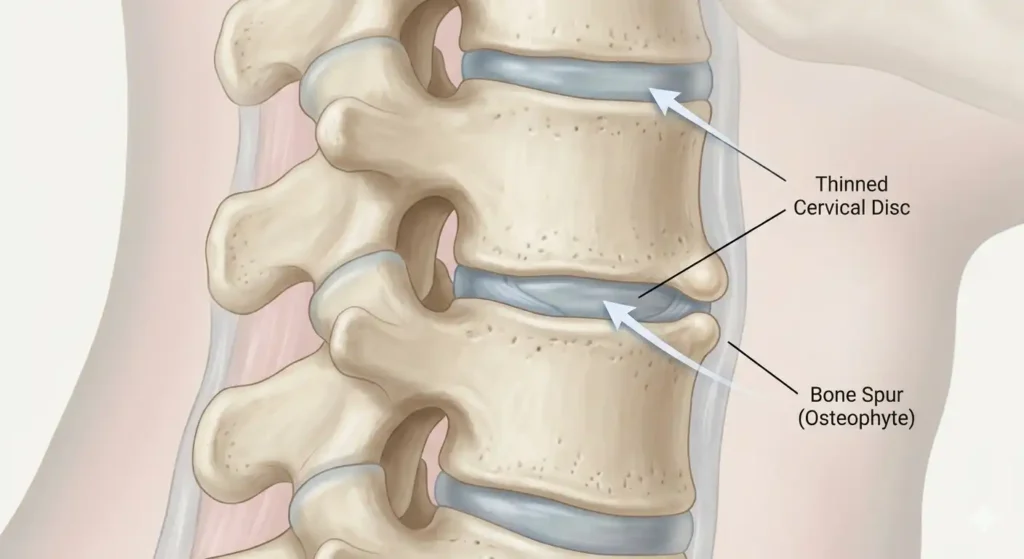
Inside your neck are seven small bones separated by rubbery shock absorbers called discs. As time passes, these discs naturally lose their moisture. They become slightly thinner and less elastic.
When the discs shrink, the bones of your spine sit closer together. To keep your neck stable, your body often grows small, smooth edges of extra bone called bone spurs.
This process is universal. In fact, more than 80% of people over the age of fifty have these exact findings on their scans without ever feeling a single day of pain. Your scan shows the age of your spine, not your level of suffering.
Why does it hurt?
If spondylosis is natural, why are you feeling an ache? Pain happens when these structural changes cause local inflammation or muscle fatigue.
When a disc thins, the small joints at the back of your neck face higher pressure. The surrounding muscles must work harder to keep your head steady.
This constant muscular overwork leads to a persistent, heavy ache across your shoulders. It can make turning your head to back up a car feel stiff and restricted.
The good news is that your body is highly adaptable. The presence of wear and tear does not mean you are trapped in a cycle of chronic pain.
The roadmap to recovery
When looking for an effective cervical ka ilaaj, your focus should be on restoring function, not changing what your X-ray looks like. You cannot reverse gray hair, and you do not need to reverse normal spinal changes to live without pain.
The vast majority of people find complete relief through structured, non-surgical management.
Treatment begins with short-term inflammation control. This allows your angry joints to calm down.
Once the acute ache eases, the real recovery work begins through specific physical therapy. A specialist therapist will teach you how to strengthen the deep, stabilizing muscles of your neck. These muscles act like a natural collar, lifting the weight of your head off your worn joints.
Swap heavy, thick pillows for a single, thin pillow that supports the natural curve of your neck.
Apply moist heat to your neck for fifteen minutes every morning to ease waking stiffness.
Avoid prolonged neck tilting while reading in bed or watching television.
Stay active with low-impact exercises like walking, which boosts blood flow to your spine.
Finding the right care partner
Managing spondylosis effectively requires expert guidance. Trying to solve the issue with random internet exercises or repetitive massages can often make joint inflammation worse.
If your daily comfort is compromised, consider visiting a specialized spine care clinic in Borivali.
An experienced team can help differentiate between simple joint stiffness and early nerve compression. Finding the best doctor for neck pain relief means finding a professional who explains your scans clearly and creates a step-by-step plan around your personal goals.
Cervical spondylosis is a normal chapter of structural aging, not a medical emergency. With the right exercises, proper workspace habits, and a calm approach, your spine will continue to support you safely for decades to come.