
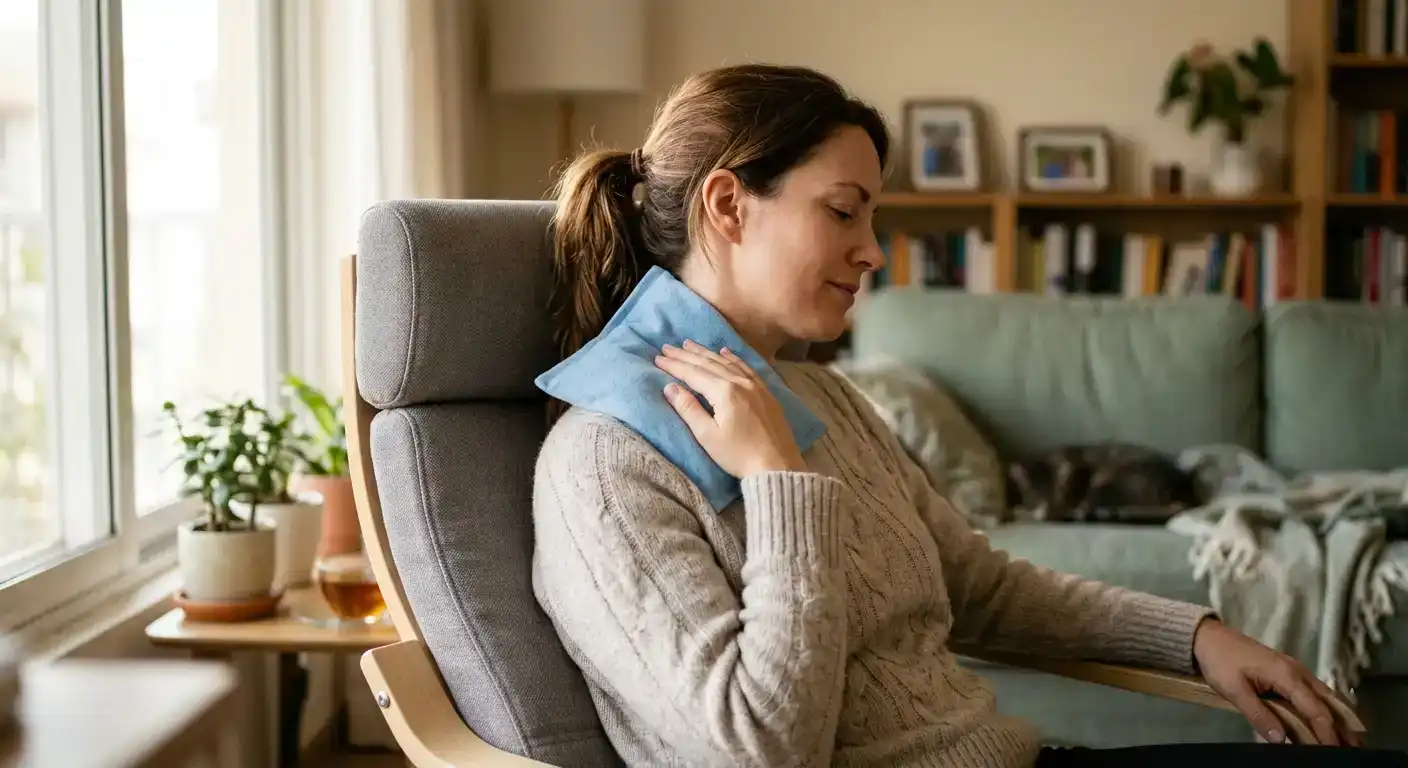
First aid for an aching neck
You finish a long day at your desk, or you wake up from a deep sleep, and your neck feels completely locked. Every time you try to look over your shoulder, a sharp, tight pain catches you off guard.
When acute pain strikes, your immediate goal is to find comfortable relief without making the underlying issue worse.
It is tempting to try aggressive stretches or use heavy massage tools to force the muscles to relax.
However, an inflamed neck requires a gentle, calculated approach. Let us look at how to relieve neck pain fast at home using safe, clinically sound methods.
The right way to use heat and ice
The first question most people ask when dealing with sudden neck stiffness is whether they should use a hot pack or an ice bag. Both are useful tools, but they serve completely different purposes.
If your neck pain started suddenly after an awkward twist or a minor injury, your tissues are likely facing acute inflammation.
In this scenario, reach for an ice pack wrapped in a thin towel. Apply it to the painful area for fifteen minutes at a time. The cold temperature constricts local blood vessels, which numbs sharp nerve pain and limits swelling.
If you are dealing with chronic, dull stiffness that feels worse when you first wake up, moist heat is your best option.
A warm bath or a heating pad relaxes tight, contracted muscles and boosts local circulation. This increased blood flow brings essential nutrients to the area, helping your tired neck muscles recover from daily fatigue.
Safe movements, not aggressive stretching
When your neck feels tight, your natural instinct is to stretch it as far as possible in the opposite direction. If your joints are inflamed, aggressive stretching will trigger a protective muscle spasm, making your pain worse.
Instead of forced stretching, focus on gentle range-of-motion movements within your pain-free zone.
Think of these movements like lubricating a rusty hinge. You want to move the joint gently to restore fluid flow, without forcing it past its current comfort limit.
Sit straight in a supportive chair and relax your shoulders downward.
Slowly turn your head to the right until you feel a gentle pull, hold for five seconds, then repeat on the left.
Gently tilt your right ear toward your right shoulder without lifting your arm, then repeat on the left side.
Discontinue any movement immediately if it causes a sharp pain to shoot down into your arm.
Modifying your sleeping environment
Your body repairs its tissues while you sleep. If your head and neck are poorly supported during the night, your neck muscles remain tense, preventing proper recovery.
Take a look at your pillow setup. Your pillow should fill the natural gap between your head and the mattress, keeping your neck perfectly aligned with your mid-back.
If your pillow is too thick, it forces your chin toward your chest. If it is too thin, your head drops backward, straining your spinal joints.
Avoid sleeping on your stomach, as this position forces your head to stay turned to one side for hours, placing severe strain on your cervical joints. Sleeping on your back or your side with a supportive, contoured pillow provides the safest environment for your spine.
Knowing your boundaries
These home remedies for neck stiffness are excellent tools for managing daily fatigue and minor muscle strains. However, home care has its limits.
If your neck pain is the result of a sudden fall or a vehicular impact, avoid self-treatment entirely and seek an immediate medical evaluation.
Furthermore, if your home remedies do not provide noticeable relief within three to four days, or if you experience tingling traveling down to your fingers, partner with a dedicated spine professional. Finding safe neck pain relief means listening to your body and knowing when it needs expert care.
Disclaimer: This content is for informational purposes only and does not substitute for professional medical advice, diagnosis, or treatment.