
The fear in the consultation room
When a specialist looks at your MRI and tells you that surgery is your best option, your mind rarely hears the technical reasons. Instead, it immediately builds a worst-case scenario.
You might worry about the risk of permanent damage or picture yourself confined to a wheelchair.
It is completely normal to feel paralyzed by fear when considering an operation on your neck. This deep anxiety is the primary reason why many patients endure severe pain and progressive weakness for years before seeking help.
Avoiding an essential discussion does not heal your spine. Let us put aside old rumors and examine the actual facts of modern spine care.
Driving with a map vs. driving in the dark
Many of the terrifying stories people share about neck operations come from decades ago. In the past, spine surgery relied heavily on a surgeon’s manual touch and basic eyesight.
Today, the clinical reality is completely different. The question, is cervical spine surgery dangerous, must be answered in the context of modern technology.
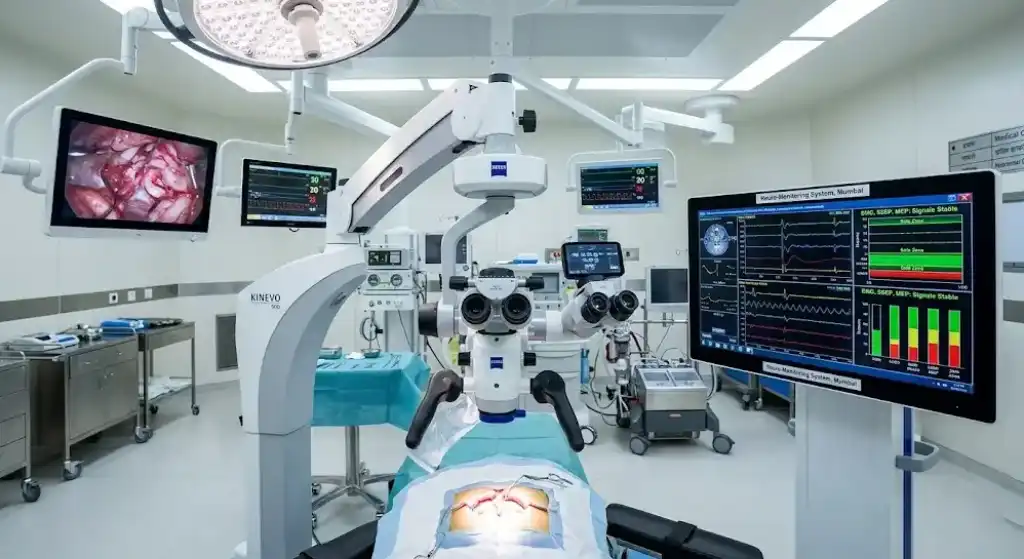
Modern neck procedures are performed using high-powered surgical microscopes that magnify the surgical field up to twenty times. This allows the specialist to see every tiny nerve tissue with absolute clarity.
Furthermore, surgeons now utilize real-time intraoperative neural monitoring. Special sensors track the electrical signals flowing through your spinal cord every single second of the operation.
If a nerve experiences even minor pressure, the machine alerts the team instantly. This technology has raised cervical spine surgery safety to incredibly high standards, turning a complex procedure into a highly predictable, controlled intervention.
The reality of your recovery timeline
Another widespread belief is that a neck operation means spending months flat on your back, unable to care for yourself.
Modern recovery protocols focus on immediate movement. Because advanced techniques preserve your natural neck muscles, your spine remains structurally stable after the procedure.
A typical modern cervical spine surgery recovery surprises most patients. You are safely assisted out of bed to walk on the very same evening or the next morning.
You can feed yourself, walk to the bathroom, and move your arms normally within twenty-four hours. The goal of modern medicine is to get you back to your regular life quickly, not to keep you in a hospital bed.

Taking control of your decision
Living on regular painkillers or delaying necessary care out of fear can lead to irreversible nerve damage. If a nerve is severely compressed for too long, it loses its ability to recover.
Ask your specialist to explain the specific nerve monitoring systems they use during surgery.
Write down your specific questions about returning to work, driving, and daily hobbies.
Seek a formal second opinion if you need additional peace of mind before making your choice.
Spine surgery is never the first option, but when it is truly necessary, it is a highly reliable tool to preserve your mobility. Talk openly with a trusted expert, look at your scans together, and base your decision on modern clinical facts rather than old anxieties.