
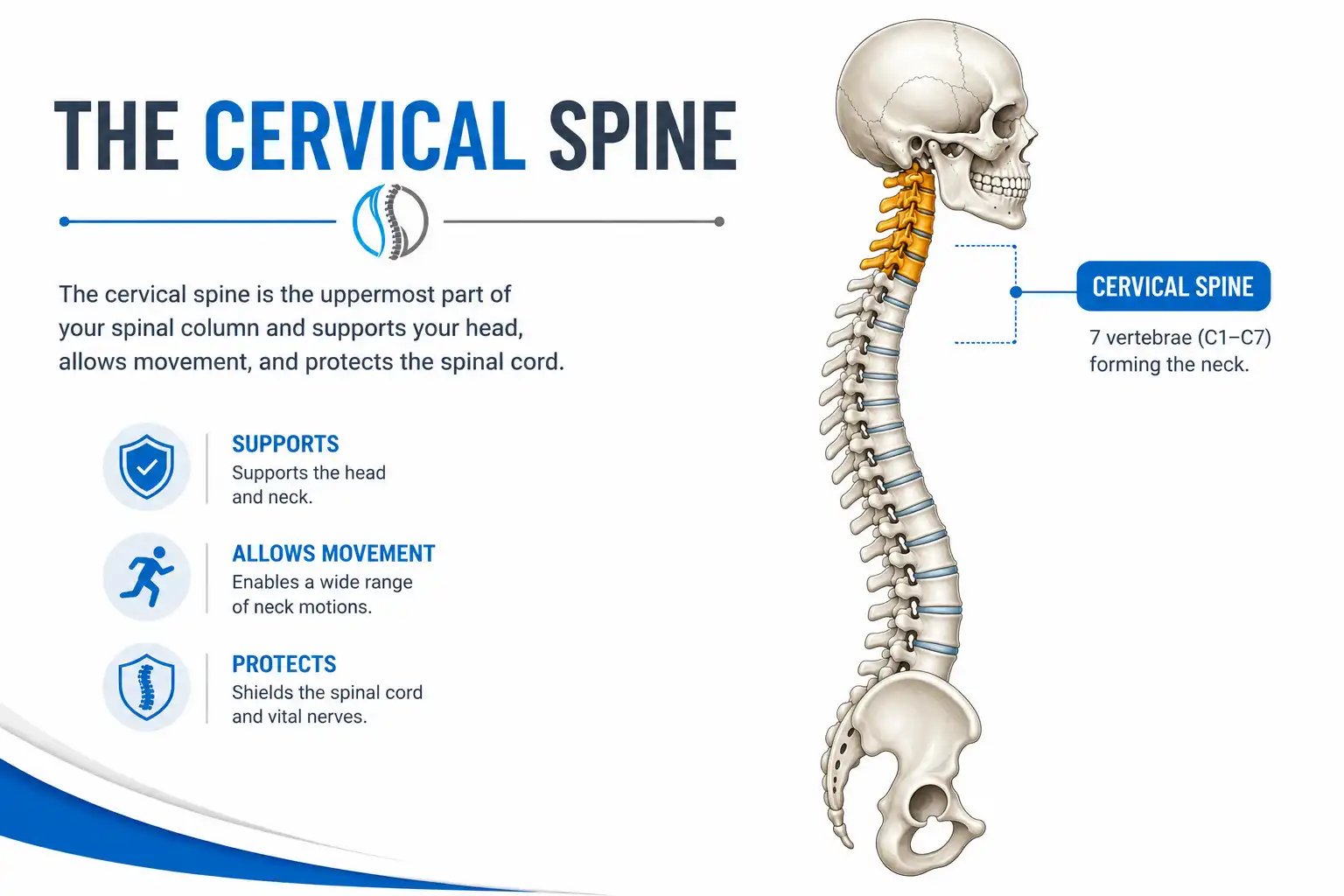
Your screen is reshaping your spine
You are reading this on a screen. Your head is likely tilted forward. Your shoulders are rounded.
Right now, your neck muscles are working three times as hard as they should. They are fighting gravity to keep your head from falling forward.
By evening, this constant struggle turns into a dull, burning ache at the base of your skull. You might feel a tight band of pain wrapping around your forehead.
This is not a disease. It is simple mechanics. Your body is reacting to the physical load you place on it every day.
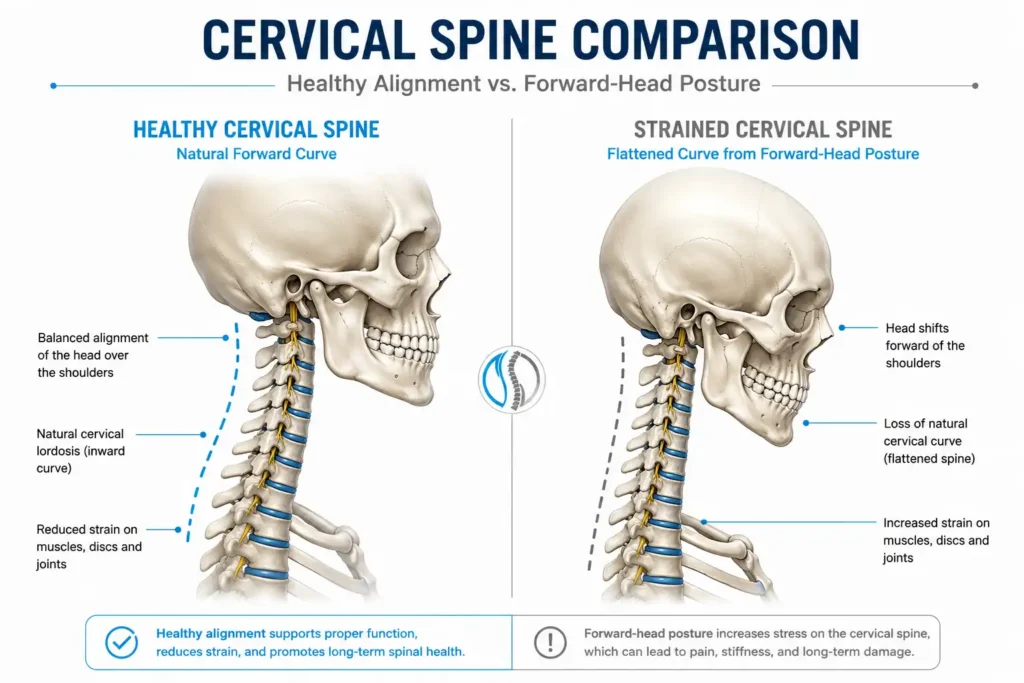
The brutal physics of looking down
An adult human head weighs about five kilograms. When your spine is perfectly straight, your neck handles this weight easily.
The trouble begins when you tilt your head forward to look at a smartphone or laptop.
When you lean forward at a 45-degree angle, the effective weight on your cervical spine increases to nearly 22 kilograms.
Your neck muscles, ligaments, and joints were never built to hold up a 22-kilogram weight for eight hours a day.
This continuous mechanical overload creates constant cervical spine strain. Your muscles stay tight to prevent injury, cutting off normal blood flow. This lack of oxygenated blood is the direct cause of your neck stiffness and headaches.
How do your joints wear out?
If you ignore the tightness, the strain moves deeper. It leaves the muscles and begins to crush your spinal discs.
Think of your discs as soft, fluid-filled cushions between your neck bones. When you hunch over, you squeeze the front of these cushions.
Over months and years, this uneven pressure forces the fluid out. The discs become thin, dry, and brittle.
When the cushions fail, bone rubs against bone. This mechanical wear is the foundation of chronic degenerative changes. It is a slow, silent process that starts with simple bad habits.
Simple changes for daily relief
You do not need to quit your office job to save your neck. You need to change the height of your tools.
First, raise your primary screen. Your eyes should align naturally with the top third of your monitor. If you work on a laptop, buy an external keyboard and place the laptop on a stack of books.
Second, change how you hold your phone. Bring the device up to your eye level instead of dropping your chin to your chest. Your arms might get tired at first, but your neck will thank you.
Third, stand up every forty-five minutes. Your spine needs movement to pump nutrients into its discs.
Set a recurring timer on your phone for a 45-minute movement break.
Stand up, roll your shoulders backward five times, and look up at the ceiling.
Keep your elbows supported at a 90-degree angle while typing to unload your shoulders.
Avoid sitting on a soft couch while working on a laptop.
When to seek an expert opinion?
Many people try to treat their symptoms with heating pads, pain balms, or regular pain medications. These options do not fix the mechanical problem. They merely turn off the alarm system.
If your neck pain does not improve after two weeks of postural corrections, you need a professional assessment.
Persistent pain that wakes you up at night, or pain that begins to travel down into your shoulder blades, requires a proper clinical evaluation.
Consulting a dedicated neck pain doctor in Mumbai can help you find the exact source of your strain before it causes permanent disc damage. A specialist can create a targeted physical therapy program to restore your muscle balance and protect your joints.
Your neck is highly resilient, but it requires cooperation. Small, daily changes in your working environment will prevent structural breakdown and keep you moving comfortably.