You go to the gym to get stronger, not to start worrying about bending, sitting, coughing, or even getting out of bed the next morning.
But that is exactly how a spine injury from gym training often begins.
Not with some dramatic collapse. Not with a huge warning sign. Most of the time, it starts quietly. You finish a heavy lifting session, feel a pull in the lower back, and assume it is normal soreness. You stretch a little, skip one session, maybe use a spray or hot pack, and expect it to settle. But then something feels different. The pain is sharper. Sitting becomes uncomfortable. Bending feels risky. The discomfort may even start moving into the buttock or leg. That is usually the moment when people start wondering whether this is still simple muscle soreness — or something more serious.
That is exactly where many people miss the early signs.
If you are dealing with a spine injury from gym lifting and are wondering whether it could be more than just post-workout pain, here are five subtle signs that the problem may be coming from the spine, not just the muscles.
1. The pain is no longer staying in the lower back
Normal muscle soreness usually stays where the muscles were stressed. It feels dull, tight, tired, and gradually improves over a couple of days.
A spine-related problem often behaves differently.
If your pain starts in the lower back but begins moving into the buttock, thigh, calf, or even foot, it may no longer be simple soreness. That kind of travelling pain can be one of the early slipped disc symptoms after lifting.
If your “back strain” has now become a leg problem too, it deserves proper attention.
For related reading, you can also link to a slipped-disc or sciatica-related blog on the Synapse Spine website.
2. Sitting feels worse than standing or walking
This is one of the most common clues people ignore.
Many patients with deadlift back pain or a disc-related issue say the same thing: standing is manageable for some time, but sitting feels much worse.
That matters because sitting, especially with poor posture, can increase pressure on the lower spine. If desk work, driving, or even eating a meal becomes more uncomfortable after lifting, it may be more than just tired muscles.
This is one of the classic patterns seen in a gym-related spine injury.
3. You feel tingling, numbness, or electric-type pain
Soreness does not usually tingle.
It should not create pins-and-needles in the leg. It should not send a shooting sensation down one side. It should not make the foot feel numb, odd, or weak.
If you notice tingling, numbness, or electric pain after lifting, the nerve may be getting irritated. That is one of the more important slipped disc symptoms after lifting, and it is something people should not keep ignoring while trying to “push through” workouts.
4. Coughing, sneezing, or bending forward suddenly hurts
This is another subtle sign that the issue may be deeper than a muscle pull.
When the disc is irritated, actions like coughing, sneezing, straining, or bending forward can suddenly trigger sharp pain. That is not how normal post-gym soreness usually behaves.
If putting on shoes, bending to pick something up, or even sneezing suddenly feels alarmingly painful, your lower back may be reacting like an irritated disc rather than an overworked muscle.
5. The pain is not improving like normal soreness should
This is the biggest clue of all.
A hard workout can absolutely leave you sore for a day or two. Sometimes even three. But the pattern should still feel like recovery.
If the pain is:
- getting worse instead of better
- still quite sharp after several days
- affecting sleep
- making sitting or bending difficult
- travelling into the leg
- coming with tingling or weakness
then it is time to stop calling it “just soreness.”
A spine injury from gym lifting often becomes obvious not because of one dramatic symptom, but because the recovery pattern feels wrong from the start.
So what actually causes this during lifting?
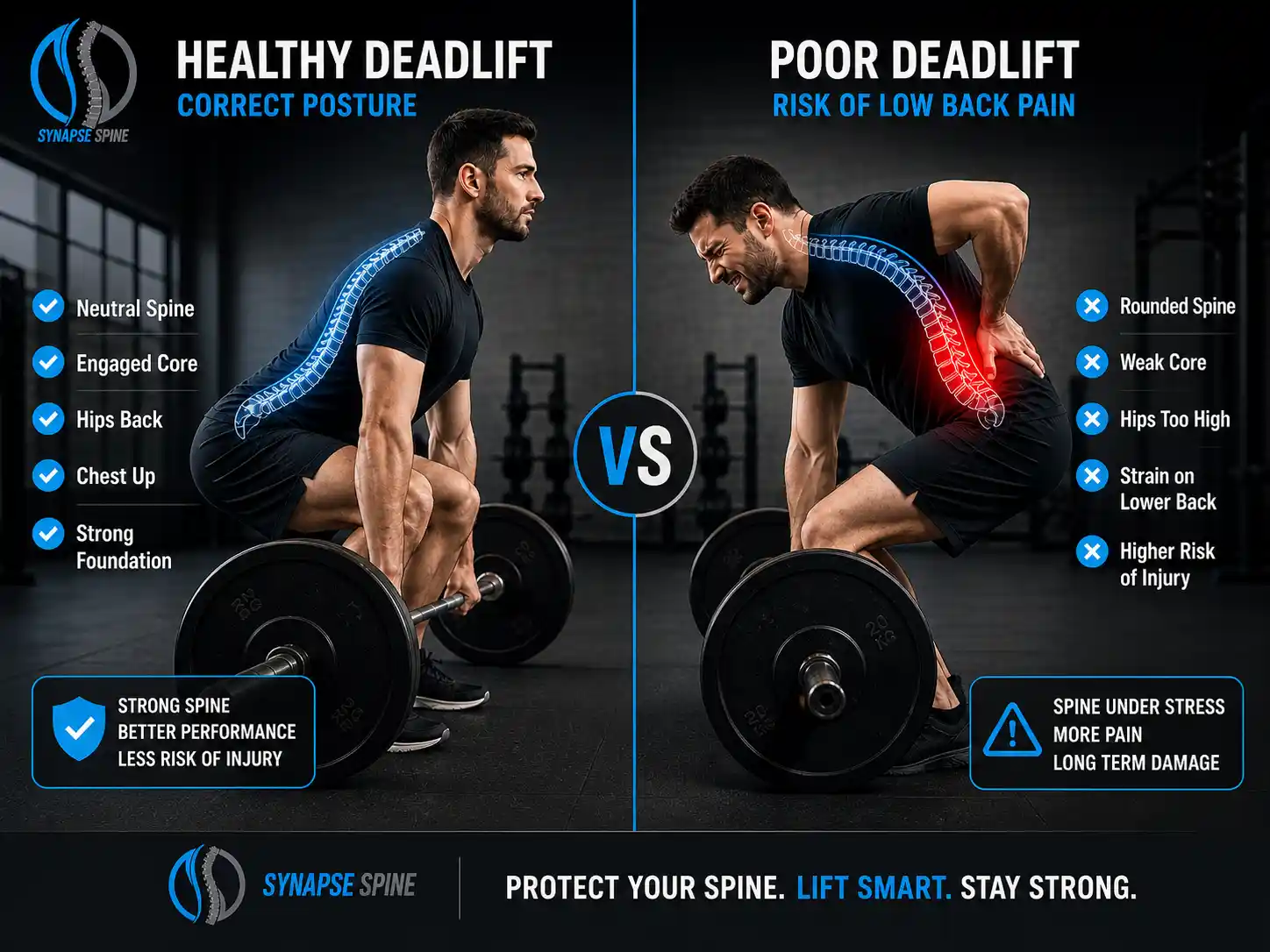
Usually, it is not the exercise name itself that causes the problem. It is how the spine gets loaded.
Common reasons include:
- lifting too heavy too soon
- poor bracing
- loss of form when fatigued
- repeated bending under load
- continuing to lift despite warning pain
Deadlifts, rows, squats, and other compound lifts are not automatically dangerous. But when technique, load, and tissue capacity do not match, the lower back can take more strain than it is ready for.
That is often how a disc injury after deadlift or other gym-related back issue begins.
When should you stop at the gym and get checked?
You should stop heavy lifting and get evaluated if:
- pain shoots into the leg
- there is numbness or tingling
- sitting is clearly painful
- bending feels unsafe
- pain is not settling after a few days
- you notice weakness or altered walking
A good rule is simple: if the pain feels different from normal soreness and starts affecting regular life, it is worth getting checked before the problem becomes harder to recover from.
Does every disc injury need surgery?
No — and that is important to understand.
Many gym-related spine problems improve with the right non-surgical plan. That may include rest from aggravating lifts, medication, guided physiotherapy, posture correction, core work, and gradual return to training.
The important thing is not to guess blindly.
If the symptoms match a disc-related pattern, early evaluation helps determine whether it is a simple strain, a disc issue, or nerve irritation. It also helps prevent the mistake of returning to lifting too early.
What should you do right now if this sounds familiar?
Do not panic. But do not ignore it either.
Pause heavy lifting for now. Stop testing the pain every day by trying “just one more deadlift.” Avoid aggressive self-treatment videos that promise instant fixes. And if the symptoms are travelling, tingling, or not settling normally, get a proper evaluation.
FAQs
1. Can deadlifts cause a slipped disc?
Deadlifts are not automatically harmful, but poor form, overload, weak bracing, or lifting through fatigue can strain the lumbar discs and contribute to injury.
2. What are the early slipped disc symptoms after lifting?
Common early signs include lower back pain that travels to the buttock or leg, tingling, numbness, pain while sitting, and sharp pain while bending, coughing, or sneezing.
3. How do I know if it is muscle soreness or a spine injury from gym training?
Muscle soreness is usually dull, local, and improves within a few days. A spine injury from gym training is more likely if the pain radiates, worsens with sitting, causes tingling or numbness, or does not improve normally.
4. Should I stop going to the gym completely if I have deadlift back pain?
You should stop painful heavy lifts until assessed. Whether you need full rest or a modified program depends on what is causing the pain.
5. When should I see a Spine Specialist in Mumbai after lifting pain?
You should seek evaluation if the pain travels into the leg, comes with numbness or weakness, or is not settling in the expected way after a few days.
Connect With Us
If your back pain after lifting no longer feels like normal soreness, it may be time to stop guessing and get clarity. Early evaluation can help identify whether you are dealing with a strain, disc irritation, or a more significant gym-related spine injury.
The problem with many gym injuries is not just the injury itself — it is how easily people dismiss the early warning signs. A spine injury from gym lifting does not always announce itself dramatically. Sometimes it begins as “just a pull” after a deadlift session and slowly turns into leg pain, tingling, sitting discomfort, or fear of bending forward. Recognising these early slipped disc symptoms after lifting can help you seek the right care sooner and avoid making the problem worse.
If your pain is no longer behaving like normal post-workout soreness, take the next step.
Medical disclaimer: This content is for educational purposes only and does not replace an in-person consultation, diagnosis, or imaging-based treatment plan.